The August 2026 Celestial Conjunction: Total Solar Eclipse, Perseid Fireballs & Roman Space Telescope Launch
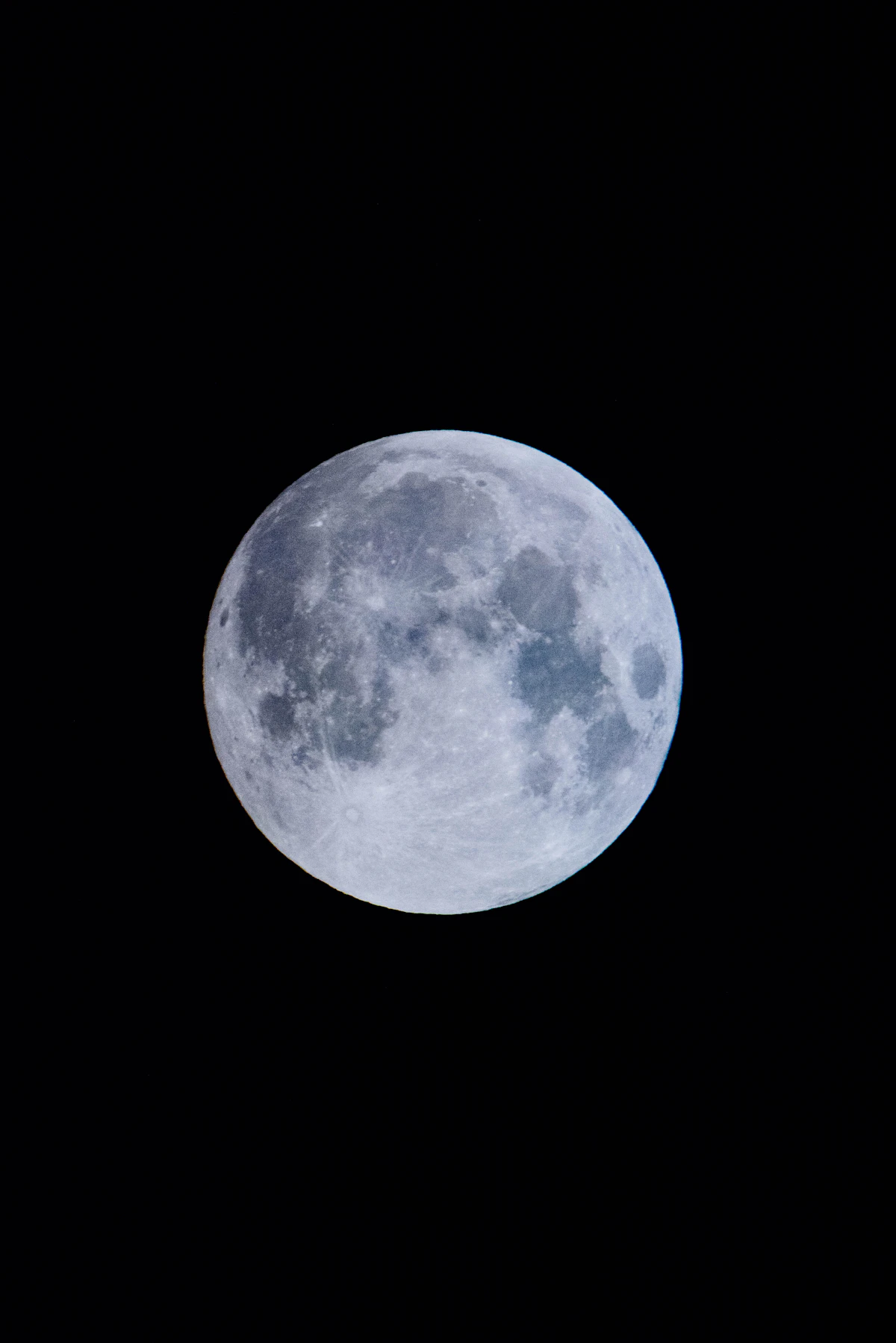
Featured Asset: Solar Eclipse Corona and High-Resolution Astrophotography
Executive Summary
August 2026 stands as the premier stargazing and space exploration month of the decade. Highlighted by the historic August 12 Total Solar Eclipse crossing Greenland, Iceland, and Spain, and coinciding directly with the dark-sky peak of the Perseid Meteor Shower, observers worldwide are preparing for unprecedented celestial alignment. Meanwhile, NASA has begun final fueling for its next-generation Nancy Grace Roman Space Telescope targeting an August 30 liftoff. This report outlines skywatching schedules, orbital mechanics, and space telescope technology.
1. The August 12 Total Solar Eclipse Meets the Perseid Meteor Peak
Astro-tourists and stargazers are converging on Europe and the North Atlantic for what astronomers call the "Super Bowl of Skywatching 2026." On August 12, 2026, a total solar eclipse will sweep along a path of totality extending across Greenland, Iceland, and Northern Spain.
Remarkably, totality aligns within hours of the annual Perseid Meteor Shower peak. Operating under dark moonless night skies, observers along the path will witness up to 100 fast fireballs per hour alongside brilliant evening conjunctions featuring Venus, Mars, and Jupiter.

Figure 1: Long-exposure astrophotography capturing Perseid fireballs against the Milky Way core.
2. NASA Fuels Next-Gen Nancy Grace Roman Space Telescope for August Launch
Parallel to ground-based observations, NASA reached a major flight integration milestone at Kennedy Space Center by initiating hypergolic propellant fueling for the Nancy Grace Roman Space Telescope, targeting an August 30, 2026 launch aboard a SpaceX Falcon Heavy.
Equipped with a 2.4-meter primary mirror and a panoramic field of view 100 times wider than Hubble, Roman is engineered to survey billions of galaxies to measure dark energy and unravel the acceleration of cosmic expansion.

Figure 2: Orbital wide-field infrared observatories mapping dark energy and exoplanet coronagraphy.
3. Coronagraph Tech and Exoplanet Direct Imaging
In addition to wide-field galactic surveys, Roman carries the world's most advanced spaceborne Coronagraph Instrument (CGI):
- Starlight Suppression: Blocks the blinding light of host stars by a factor of one billion, enabling direct imaging of faint gas giant exoplanets.
- Deformable Mirror Optics: Active wave-front control corrects microscopic optical distortions in real time to isolate exoplanetary atmospheres.
Key Takeaways for Skywatchers & Space Enthusiasts
- August 12 Totality Path: The path of total eclipse covers Reykjavik, Reykjavik, A Coruña, and Palma de Mallorca, ending at sunset over the Mediterranean.
- Dark-Sky Meteor Conditions: The moonless lunar cycle during mid-August provides ideal contrast for observing high-speed Perseid fireballs.
- Wide-Field Infrared Cosmology: Roman's 100x wider field of view will complete galactic surveys in weeks that would take decades on heritage telescopes.

Comments
Post a Comment