Record-Breaking Hydrogen Detonation Turbines & US Quantum Supercomputing Milestones in August 2026

Featured Asset: Hydrogen Detonation Combustion and High-Efficiency Clean Propulsion Infrastructure
Executive Summary
August 4, 2026, marks major technological triumphs across green energy propulsion and quantum supercomputing. Researchers at the Karlsruhe Institute of Technology (KIT) operated a compressorless hydrogen detonation turbine for a record 303 seconds, surpassing NASA's prior benchmark and opening pathways for zero-emission aviation. Concurrently, IQM Quantum Computers delivered its first U.S. quantum processing system to the Department of Energy’s Oak Ridge National Laboratory, while IBM unveiled self-verifying quantum error detection protocols.
1. German KIT Team Shatters NASA Record with Hydrogen Detonation Turbine
In a breakthrough for clean propulsion and energy generation, scientists at the Karlsruhe Institute of Technology (KIT) announced on August 4, 2026, that they have operated a compressorless hydrogen gas turbine for a record-breaking 303 seconds.
Unlike conventional gas turbines that rely on heavy mechanical compressors, the KIT turbine uses high-frequency pressure-gain detonation waves to compress and ignite hydrogen fuel internally. By sustaining continuous detonation for over five minutes, the experiment surpassed NASA's prior 250-second world record, paving the way for ultra-lightweight, highly efficient clean power systems in commercial aviation and utility grids.
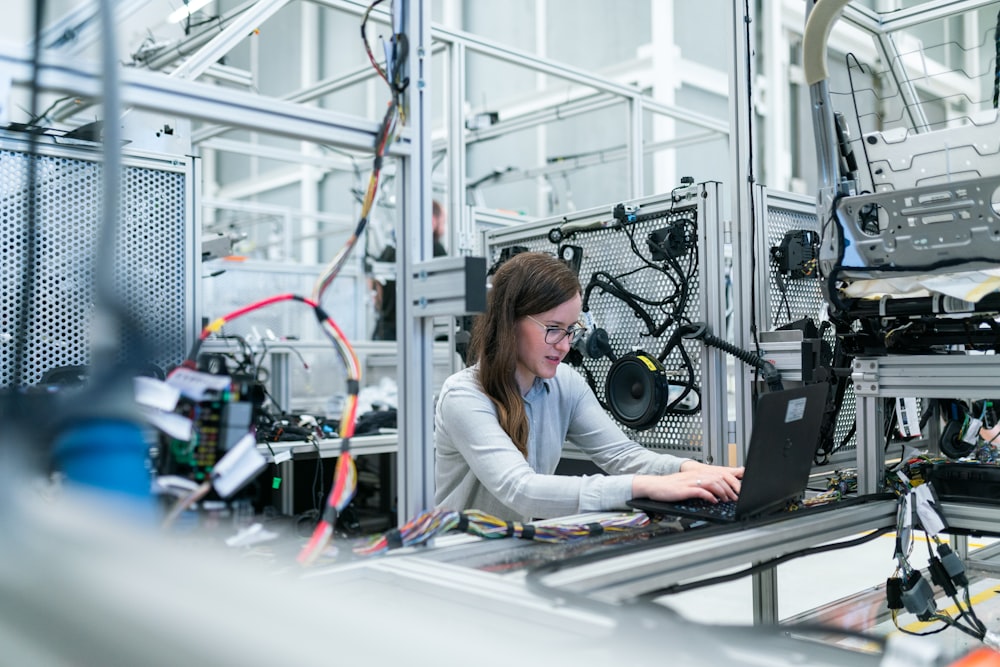
Figure 1: High-temperature pressure-gain combustion chamber testing for zero-emission aircraft engines.
2. IQM Delivers Quantum Processing System to Oak Ridge National Laboratory
Addressing the computational frontier, European quantum leader IQM Quantum Computers confirmed on August 4, 2026, the successful delivery of its first US-deployed quantum processing unit to the US Department of Energy's Oak Ridge National Laboratory in Tennessee.
The installation links IQM's processing unit directly with Oak Ridge's exascale supercomputing infrastructure. With over €102 million in commercial order backlogs, the deployment demonstrates how hybrid quantum-classical supercomputing clusters are transitioning from experimental physics into active scientific research.

Figure 2: Hybrid quantum-classical supercomputer integration supporting error-verified logical circuits.
3. IBM Unveils Self-Verifying Quantum Error Detection Protocols
In parallel quantum developments, IBM Research published a new verification methodology called doped Clifford sampling (DCS) in collaboration with the University of Chicago.
DCS introduces real-time error detection built directly into quantum logic circuits, enabling systems to check their own output calculations without needing classical supercomputer verification. This method resolves one of quantum computing's greatest scaling hurdles: verifying that large, multi-qubit calculations remain accurate as circuit depth increases.
Key Takeaways for Engineers & Tech Leaders
- Pressure-Gain Hydrogen Combustion: Eliminating mechanical compressors dramatically reduces engine weight, raising efficiency standards for hydrogen aviation.
- Hybrid Supercomputing Architecture: Connecting quantum processors to exascale classical supercomputers enables immediate commercial acceleration in materials discovery and logistics.
- Logical Circuit Reliability: Built-in quantum error verification provides a trustworthy foundation for scaling quantum algorithms beyond classical simulation limits.

Comments
Post a Comment